
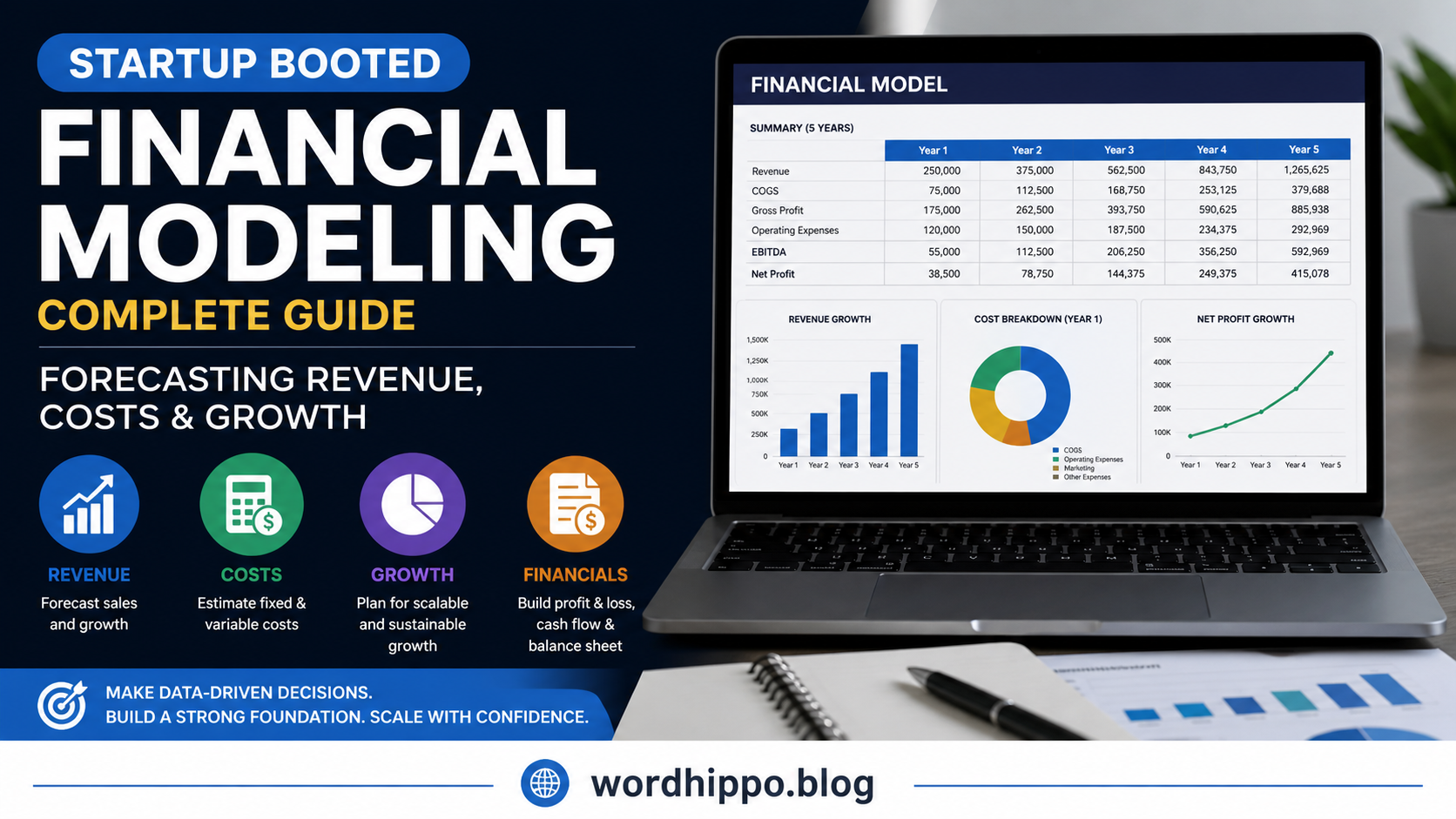

Startup booted financial modeling is becoming an essential discipline for modern entrepreneurs who prefer to build their ventures without relying on external funding. In a world where venture capital often dominates startup narratives, many founders are choosing a different path, focusing on sustainability, independence, and disciplined financial planning. This approach requires clarity, precision, and a strong understanding of how money flows through a business.
When founders rely on internal revenue, every financial decision carries greater weight. This is where startup booted financial modeling plays a critical role by transforming assumptions into measurable projections. It helps entrepreneurs map their journey from early-stage operations to long-term growth while maintaining control over their financial future.
Understanding Startup Booted Financial Modeling
Startup booted financial modeling refers to the process of forecasting financial performance using internally generated revenue instead of external investments. This method emphasizes realistic assumptions, careful budgeting, and continuous monitoring. It allows founders to create a financial roadmap based on actual performance rather than speculative funding rounds.
Unlike venture-backed models, this approach requires founders to remain grounded in financial discipline. Every expense must justify its value, and every revenue stream must be nurtured carefully. Startup booted financial modeling encourages entrepreneurs to think strategically, ensuring that growth is both achievable and sustainable over time.
Why Financial Modeling is Critical for Bootstrapped Startups
Financial modeling provides a structured way to plan and evaluate business decisions. For bootstrapped startups, it becomes even more crucial because resources are limited and mistakes can be costly. A well-built model helps founders anticipate challenges, allocate resources efficiently, and make informed decisions.
Additionally, startup booted financial modeling reduces uncertainty by offering clear insights into future financial performance. It allows entrepreneurs to test different scenarios, identify risks early, and adjust strategies accordingly. This proactive approach can make the difference between survival and failure in competitive markets.
Key Components of a Startup Financial Model
A comprehensive financial model includes several interconnected components that provide a complete view of a startup’s financial health. Revenue forecasting is one of the most critical elements, as it determines how much income the business expects to generate over time. Accurate projections help guide strategic planning and operational decisions.
Cost structure and cash flow management are equally important. Understanding fixed and variable expenses ensures that startups can control spending effectively. Cash flow projections help maintain liquidity, while profitability analysis highlights whether the business is on track to achieve its financial goals.
Step by Step Guide to Building a Financial Model
Building a financial model begins with setting clear and realistic goals. Founders must define what success looks like and establish measurable targets. This includes identifying key revenue streams and understanding how they contribute to overall growth.
The next step involves estimating costs and creating projections based on reliable data. Startup booted financial modeling requires continuous refinement, so assumptions should be tested regularly. By updating the model frequently, founders can ensure that it remains relevant and accurate as the business evolves.
Revenue Forecasting Strategies
Revenue forecasting is a fundamental aspect of startup booted financial modeling. It involves predicting future income based on historical data, market trends, and business strategies. Founders can use different approaches, such as top-down or bottom-up forecasting, depending on their specific needs.
Accurate forecasting requires a deep understanding of customer behavior and pricing strategies. Entrepreneurs must avoid overly optimistic assumptions and focus on realistic projections. By doing so, they can build a reliable financial model that supports long-term growth.
Cost Management and Budgeting Techniques
Effective cost management is essential for bootstrapped startups. Every expense must be carefully evaluated to ensure that it contributes to business growth. Categorizing costs into fixed and variable expenses helps founders understand where money is being spent and identify areas for improvement.
Budgeting techniques play a vital role in maintaining financial discipline. Startup booted financial modeling encourages entrepreneurs to create detailed budgets and monitor them regularly. This approach ensures that resources are allocated efficiently and unnecessary expenses are minimized.
Cash Flow Management for Bootstrapped Startups
Cash flow is the lifeblood of any business, especially for startups operating without external funding. Managing cash flow effectively ensures that the company can meet its financial obligations and continue operating smoothly. Startup booted financial modeling provides tools to track and predict cash inflows and outflows.
Maintaining positive cash flow requires careful planning and proactive management. Founders must monitor their financial position regularly and take corrective actions when necessary. This includes optimizing payment cycles, reducing expenses, and increasing revenue streams.
Financial Metrics Every Founder Should Track
Tracking financial metrics is essential for evaluating business performance. Key metrics such as customer acquisition cost, lifetime value, and profit margins provide valuable insights into the health of a startup. These indicators help founders make informed decisions and improve their strategies.
Startup booted financial modeling emphasizes the importance of data-driven decision-making. By monitoring key metrics regularly, entrepreneurs can identify trends, measure progress, and adjust their plans accordingly. This approach ensures that the business remains on a path toward sustainable growth.
Tools and Templates for Financial Modeling
There are various tools and templates available to simplify the financial modeling process. Spreadsheet software remains a popular choice due to its flexibility and accessibility. Many entrepreneurs use pre-built templates to save time and ensure accuracy.
Advanced tools offer automation and real-time insights, making it easier to manage complex financial models. Startup booted financial modeling benefits from these technologies by improving efficiency and reducing the risk of errors. Choosing the right tool depends on the specific needs of the startup.
Common Mistakes in Startup Booted Financial Modeling
One of the most common mistakes is overestimating revenue while underestimating costs. This can lead to unrealistic projections and poor decision-making. Founders must remain cautious and base their assumptions on reliable data.
Another common issue is failing to update the financial model regularly. Startup booted financial modeling requires continuous monitoring and adjustment. Ignoring changes in the business environment can result in outdated projections and missed opportunities.
Advanced Strategies for Growth and Scaling
As startups grow, their financial models must evolve to reflect new challenges and opportunities. Scenario analysis and sensitivity testing help founders understand how different factors impact their business. This allows them to prepare for various outcomes and make strategic decisions.
Reinvesting profits wisely is another key strategy for scaling a bootstrapped startup. Startup booted financial modeling helps entrepreneurs identify the best opportunities for growth while maintaining financial stability. This approach ensures that expansion is both sustainable and profitable.
Conclusion
Startup booted financial modeling is a powerful tool for entrepreneurs who want to build sustainable businesses without relying on external funding. It provides a structured approach to planning, forecasting, and decision-making, enabling founders to navigate challenges with confidence.
By adopting this method, startups can achieve long-term success through disciplined financial management. The key lies in maintaining accurate models, monitoring performance regularly, and adapting strategies as needed. With the right approach, bootstrapped startups can thrive in competitive markets.
FAQs
What is startup booted financial modeling
Startup booted financial modeling is the process of forecasting a startup’s financial performance using internal revenue instead of external funding. It helps founders plan growth and manage resources effectively.
Why is financial modeling important for bootstrapped startups
It provides clarity, reduces risks, and supports better decision-making. It helps startups allocate resources efficiently and plan for sustainable growth.
What tools can be used for financial modeling
Common tools include spreadsheet software and specialized financial modeling platforms. Templates and automation tools can also improve efficiency.
How often should a financial model be updated
A financial model should be updated regularly, especially when there are changes in revenue, expenses, or market conditions. Monthly updates are often recommended.
Can a startup grow without external funding
Yes, many startups achieve success through bootstrapping. With proper financial planning and disciplined execution, sustainable growth is possible.